Race starts and overtaking in karting
Karting starts and passes are won by being calm and predictable: stay clean through the first corner, use the slipstream to get close, and set the pass up on the corner exit before the braking zone. Defend with one clear move, and leave the other driver room.
Updated
Key facts
| Rolling start | The grid moves off in rows behind the leader and accelerates when the start is given |
| Standing start | Karts start from a stop, used in some championships and classes |
| First corner | Stay predictable, keep a gap, aim for the exit |
| Passing | Slipstream, then a move from the previous corner exit |
| In the game | 20-kart grids from the back, 12 in Superkart, slipstream, rivals that defend |
Rolling starts and standing starts
The details depend on the championship, so read the rules of your event. In general terms, in a rolling start the karts follow the front row at a controlled speed in two rows and everybody accelerates when the start is given. In a standing start the karts begin from a stop, so smooth throttle and traction matter more. In both, the main skill is the same: look ahead, keep your row tight and start accelerating together, not before.
Surviving the first corner
A big grid arrives at the first corner all at the same time and with a lot less room than on a normal lap. Stay predictable: hold your line, avoid sudden moves and keep a small gap to the kart in front, because late braking in a crowd usually ends in contact. Aim for a good exit rather than a position: you can pass back down the next straight, but a spin costs far more. Races are rarely decided on the first lap.
Using the slipstream
A kart following closely behind another has less air resistance, and gains speed on the straight. To use it, stay close on the corner exit, keep a straight line behind the kart ahead and pull out to one side before the braking zone. The pull-out has to be early, because moving out late leaves you alongside with no time to brake.
Setting up a pass
The pass starts at the previous corner, not at the braking zone. A good exit gives you speed, and the slipstream gets you close. Try to be alongside before you brake, on the inside if the corner is coming up, and take a slightly later braking point, but not so late that you cannot make the corner. If you cannot get alongside, back off and try again next lap, because a clumsy dive can lose several places at once.
Defending fairly
A fair defence is one clear move to cover the inside, made before the braking zone and held, without weaving. Do not move under braking, and leave the other driver room on the outside, at least the width of a kart. Fair racing keeps everybody on the track, including you. It also helps to take the late-apex line, because it gives you the better exit and makes it harder to be passed on the next straight.
Practise starts and overtaking in Real Karting
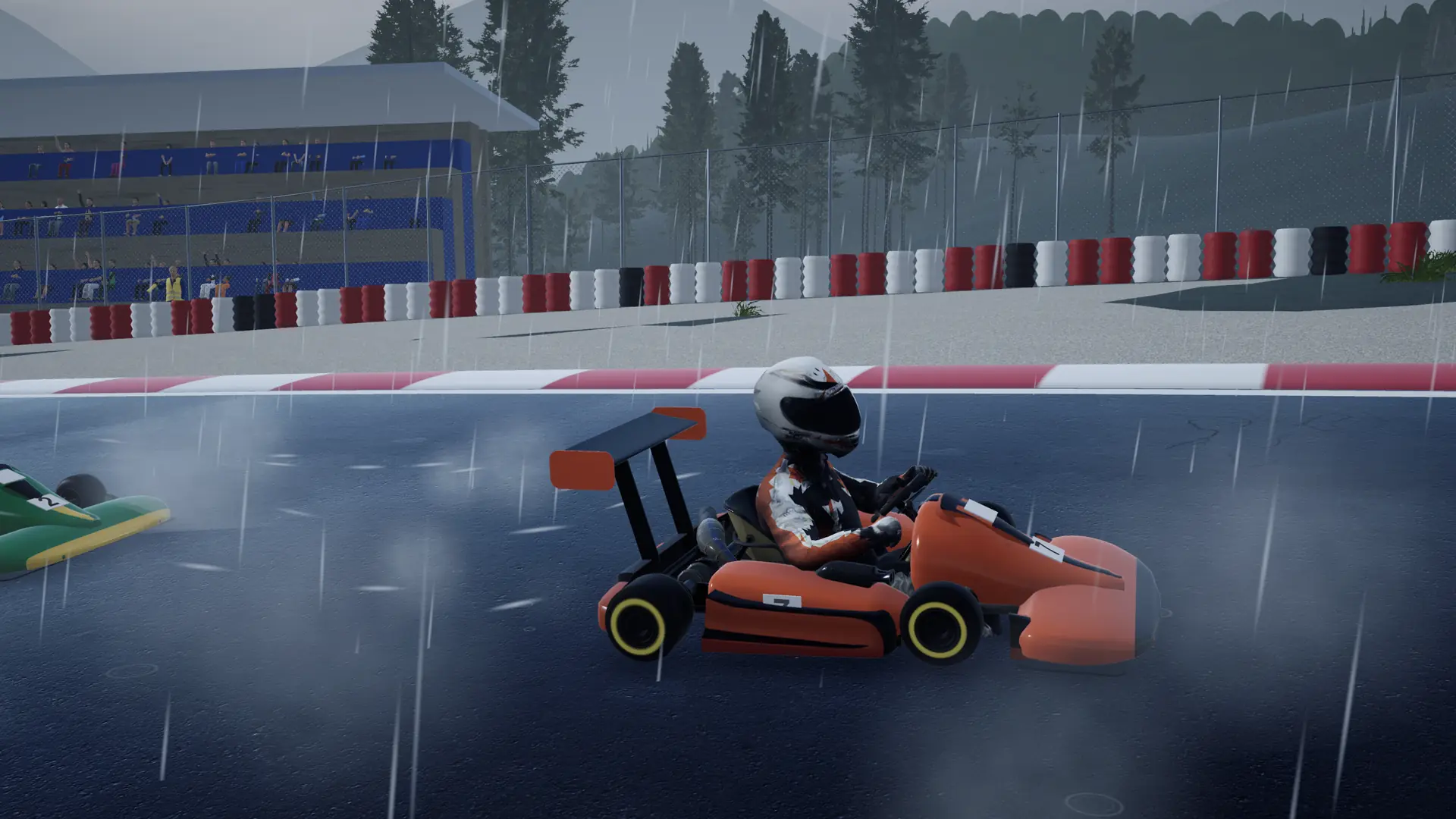
Every career event starts from the back of a 20-kart grid, or 12 karts in Superkart, so each race is a lesson in overtaking. The AI rivals defend, look for the gap and can crack under pressure, and the slipstream is simulated, so you can feel the pull on the straights. The Cadet class is a good place to practise slipstreaming and defending a position.
Try the real circuit Circuito de Pedrezuela and treat the first lap as survival: stay clean in the crowd, use the slipstream down the straight and plan your move one corner ahead. Keep the assists on while you learn, and use your phone as the steering wheel in WHEEL mode for small, precise corrections. If you want to improve a single lap, read the guide on the racing line, and see the one on driving in the rain for wet races.
Frequently asked questions
What is a rolling start in karting?
A start in which the karts move off in two rows behind the leader at a controlled speed and accelerate when the start is given. Standing starts, from a stop, are used in some championships.
How do I avoid crashes at the first corner?
Be predictable, keep a small gap, avoid late braking in the crowd and aim for a clean exit instead of gaining places at any cost.
How does the slipstream help in karting?
A kart close behind another has less air resistance, so it gains speed on the straight and can pull out and pass before the braking zone.
How do I defend a position fairly?
Make one clear move before the braking zone, do not weave or move under braking and leave room on the outside.
 Free on iPhone, iPad & Mac
Helmet on. The grid is waiting.
Download Real Karting and turn your phone into a steering wheel.

 Coming soonGoogle Play
Free on iPhone, iPad and Mac. Android coming soon.